
Selection guides
BOPP vs PET lamination film: how to choose by substrate and fold
The two base films look similar on a sample table and behave differently on press. A practical comparison of stiffness, elongation, heat response and cost per sheet.
9 min read · 28 Oct 2026
What actually differs between BOPP and PET
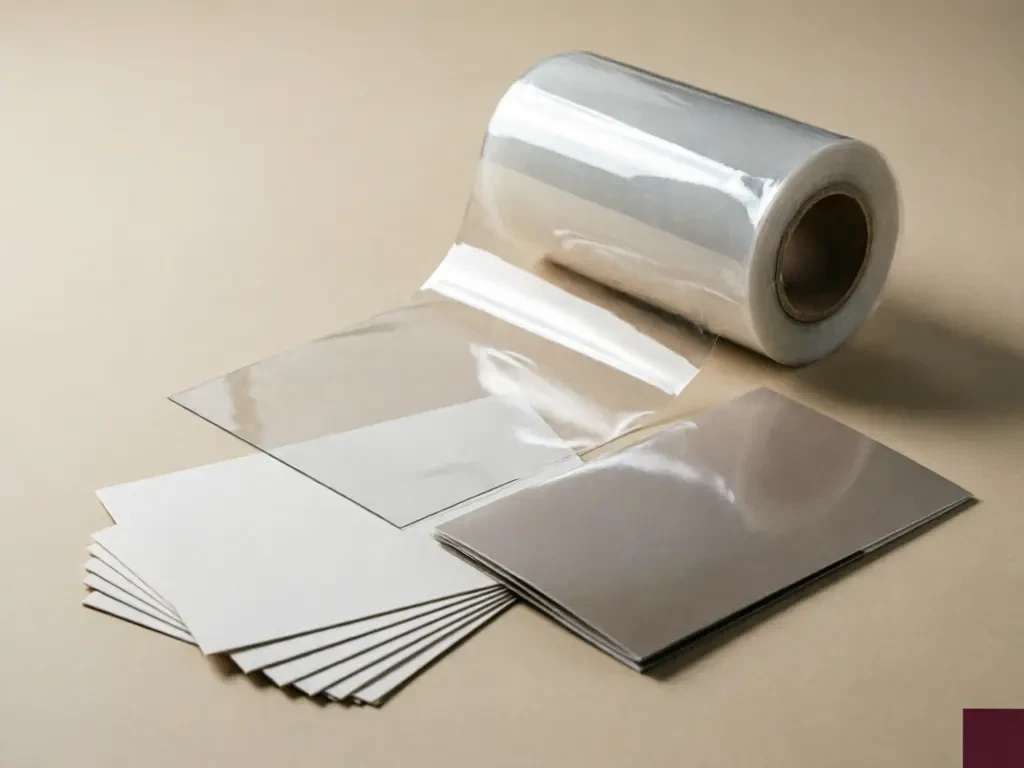
Both films arrive on a roll with an adhesive layer already applied, and both are bonded to printed sheets through a heated nip. The difference is in the base: biaxially oriented polypropylene is softer and stretches slightly under tension, while polyester is denser, harder and close to dimensionally stable.
That single mechanical difference explains most of the practical choices downstream. A film that stretches will follow the sheet through the nip and forgive small tension errors. A film that does not stretch holds register but transfers any tension problem into the sheet.
- BOPP: lower density, more stretch, softer hand-feel, lower cost per square metre
- PET: higher density, near-zero stretch, harder surface, higher cost per square metre
Choose by what happens after lamination
Lamination is rarely the last step. The sheet is printed, laminated, cut, creased, folded, glued, packed and shipped. Each of those steps loads the film differently.
For a standard folding carton in the 300–400 gsm range, BOPP is usually sufficient: the fold is a single crease, the load is modest, and the lower cost matters on long runs. For a spine that opens and closes thousands of times, or a map that is folded and unfolded in the field, the film has to resist fatigue. That is where PET earns its price.
Heat response and press settings
PET needs slightly more heat to reach the same bond strength, and it tolerates a narrower window before curl appears. On a machine that holds temperature well this is not an issue. On an older laminator with drifting roller temperature, a PET film will show the drift earlier than BOPP.
A practical routine: set the temperature 5 °C above the datasheet midpoint, run three sheets at production speed, then check peel at the trim edge by hand. If the film lifts cleanly with no fibre pull, the bond is not yet formed.
Cost per sheet, not cost per kilogram
PET is sold at a higher price per kilogram and has a higher density, so the difference per roll looks large. What matters on a job is cost per thousand sheets, which includes yield, waste at startup and rework from failed bonds.
A shop running 350 gsm cartons at moderate fold severity will usually find BOPP cheaper per thousand sheets even after waste. A shop running thin book stock where curl causes rejects will often find PET cheaper, because the reject rate falls.
A short decision rule
If the sheet folds once and the load is a carton on a shelf, start with BOPP. If the sheet folds repeatedly, is thinner than 100 gsm, or must hold register over a long web, start with PET. If the print is digital, start with the digital range regardless of base film, because activation temperature matters more than base stiffness.
None of this replaces a trial. Request sample rolls in the gauge you intend to run and laminate the actual board with the actual ink.
Before you commit a roll
Trial on your own board at production speed. Send the substrate, ink coverage and machine model and we will confirm a starting grade and temperature.
Ask about this application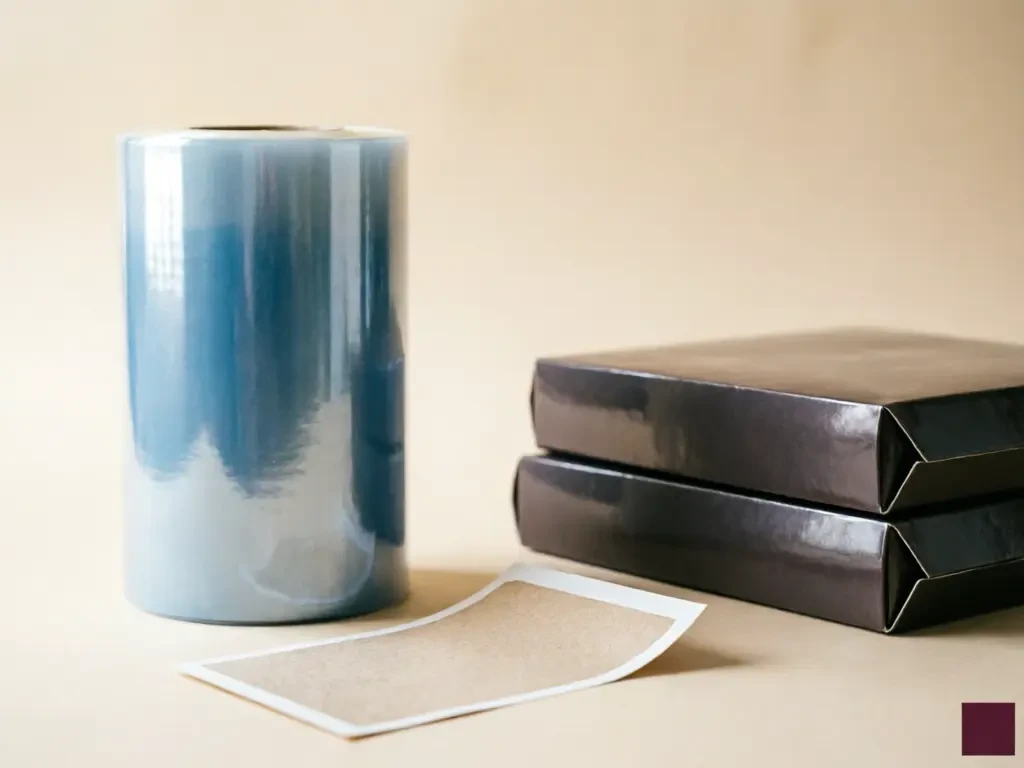
More notes
Selection guides
Gloss or matt: what the surface does to print, light and handling
Gloss raises colour saturation and reflection; matt lowers both. The choice changes how a carton reads on shelf and how it ages in the hand.
Application notes
Soft touch film on premium packaging: process notes that decide the result
Velvet surfaces are judged by hand, so small process errors show. Temperature, nip pressure and post-press decoration each change the final feel.
Process & troubleshooting
Blisters and edge lift on digitally printed sheets: a diagnostic order
Most digital lamination faults come from four causes. Working through them in order avoids changing three settings at once.
Enquiry
Tell us what you laminate.
Board weight, ink coverage, film gauge and machine model are enough to start. We reply with a grade suggestion and a starting temperature for your trial.
- +86 159 5920 0670
- Company
- Xiamen Zchain Industry Co., Ltd.
- Location
- Xiamen, Fujian, China
Distributors and OEM label projects: mention your market and annual volume and we will route the enquiry accordingly.
Request a Free Sample